
As we approach International Women’s Day, it feels important to say something that often goes unspoken: women are the foundation of myofunctional therapy and the sciences that surround it.
Women make up the majority of the therapeutic workforce in this field, and women have been responsible for advancing much of the science that has shaped its modern form. The field we practice today did not simply appear; it was built through decades of persistence, curiosity, and courage by clinicians who believed in the importance of oral function long before the broader medical community was ready to listen.
My own entry into this field was made possible by women who generously opened doors, shared their knowledge, and welcomed younger clinicians into their work. Many of them did this during years when the discipline was dismissed, misunderstood, or simply ignored.
So today feels like the right moment to pause and acknowledge some of these extraordinary pioneers.
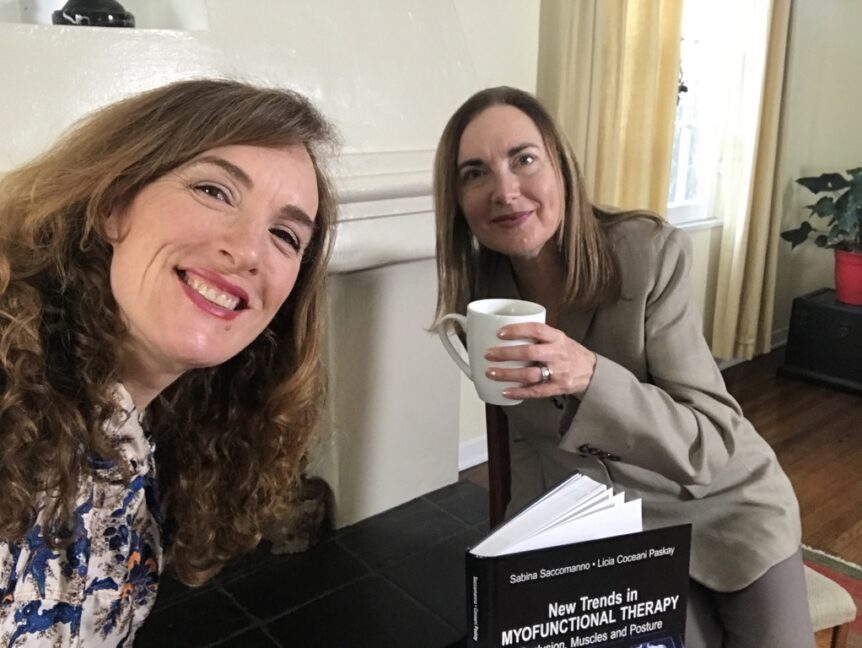
Licia Coceani Paskay
This past year we lost one of the true giants of the field: Licia Coceani Paskay.
Licia’s story alone reflects the interdisciplinary nature of myofunctional therapy.
She was trained both as a dental hygienist and speech pathologist in Italy before eventually coming to the United States. After studying with Daniel Garliner, she pursued a speech pathology degree in the U.S. to ensure her work would be fully recognized within American licensure and scope-of-practice frameworks.
Her leadership and contributions were profound. Licia served as President of the IAOM, was the founding president of the AAMS, and contributed to numerous publications, including:
New Trends in Myofunctional Therapy and Food, Chewing, and Nutrition, which she edited.
Her work exploring chewing and its physiological impact even led to research collaborations with NASA. Yet despite her stature, what I remember most about Licia was her generosity.
She hosted students from around the world, opening her clinic to anyone who wanted to learn. I remember shadowing her early in my career and noticing that she sometimes charged $10 for a session. At first, I was startled. I had earned more babysitting as a teenager.
But Licia explained something I never forgot: it was important to charge something, because patients would value the work more and compliance would improve. Yet she never allowed finances to become a barrier to care. If someone needed therapy, she found a way.
She practiced from the heart, and the field is better because of it.
Joy Moeller
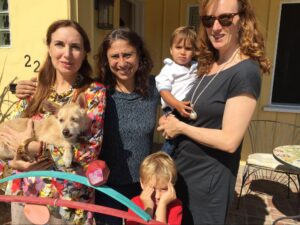
Licia taught for decades alongside two other extraordinary women: Joy Moeller and Barbara Greene.
Together they carried the torch during years when their message was often met with skepticism, and sometimes outright hostility. I heard countless stories of lectures where physicians openly questioned the value of myofunctional therapy.
I even witnessed one formidable ENT physician stand up and walk out of a lecture when Licia began discussing the relationship between Eustachian tube function and myofunctional therapy.
Joy Moeller, a dental hygienist, helped redefine what was possible within her profession. She demonstrated that dental hygienists were not simply assistants within the dental model — they could become leaders in prevention, oral function, and long-term health.
Her belief that registered dental hygienists were uniquely positioned to treat myofunctional disorders was bold at the time. Today it feels obvious.
Joy spent decades teaching within the IAOM alongside Licia and Barbara. Later, when sleep-disordered breathing was still struggling for recognition, the Academy of Applied Myofunctional Sciences (AAMS) was born. Its mission was to bring together the science and speakers that connected breathing, function, sleep, and systemic health.
Joy’s articles and lectures continue to inspire dental hygienists entering this field today. Her enthusiasm for learning — and her unwavering belief that this therapy helps people — remains contagious.
Even now, she continues to practice and remains an active voice in the community, including within the Myo Coffee Klatsch. Her message is simple and steady: this work matters, and we must keep going.
Barbara Greene
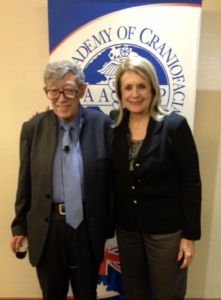
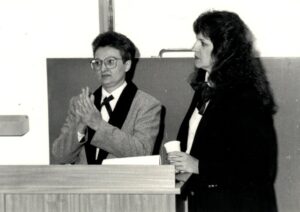
This year marks a remarkable milestone: Barbara Greene’s 55th anniversary in myofunctional therapy, which she will celebrate on June 21st.
Barbara is also a founding member of the Academy of Orofacial Myofunctional Therapy (AOMT) and remains a vital force in the field today.
Like Licia and Joy, Barbara trained under Daniel Garliner, and she began teaching at a time when myofunctional therapy was widely viewed as fringe science. The skepticism directed at the field was often stronger than the evidence used to support that skepticism.
For many years, clinicians knew the therapy worked, but the research base had yet to catch up.
That began to change in 2009, when Brazilian researcher Kátia Guimarães published the landmark study demonstrating that oropharyngeal exercises could significantly reduce the apnea-hypopnea index (AHI) in patients with obstructive sleep apnea.
That single paper opened a door that had been closed for decades.
The Brazilian Contribution
Brazil has contributed enormously to the scientific maturation of the field.
Irene Marchesan, PhD
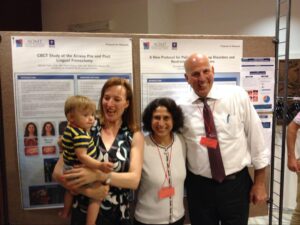
Irene Marchesan, PhD, through her work at CEFAC in São Paulo, developed one of the most influential classification systems forlingual frenulum restriction. Her Lingual Frenulum Protocol laid the foundation for later functional classifications such as TRMR (Tongue Range of Motion Ratio) and LPS (Lingual Palatal Suction).
Roberta Martinelli
Her colleague Roberta Martinelli expanded this work by developing protocols to assess tongue-tie in newborns, helping clinicians intervene earlier and more effectively.
These contributions moved the field from observation into structured assessment and measurable function.
Claudia Maria de Felício
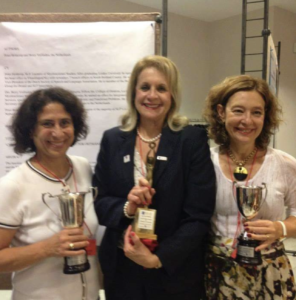
Another Brazilian researcher whose work deserves recognition is Claudia Maria de Felício, whose contributions have significantly advanced our understanding of temporomandibular disorders (TMD) and the role of orofacial myofunctional therapy in treating these patients.
Through decades of clinical research and the development of standardized assessment tools such as the OMES protocol (Orofacial Myofunctional Evaluation with Scores), Claudia helped establish objective ways to measure orofacial function and dysfunction. Her work has been instrumental in demonstrating how muscular patterns, oral behaviors, and functional imbalances influence the mechanics of the temporomandibular joint and surrounding structures.
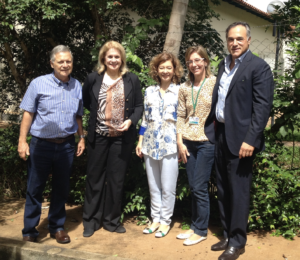
Years ago, we had the true honor of visiting Claudia and her multidisciplinary clinic in Brazil, where clinicians from multiple specialties worked together to address pain, function, and structural considerations of the TM joint.
What struck me most was the seamless integration of disciplines — dentistry, speech pathology, physical therapy, and pain science — all working toward restoring physiologic balance. Claudia’s research and clinical leadership have placed myofunctional therapy firmly on the TMD map, providing scientific credibility not only for its role in managing temporomandibular disorders, but also for its expanding relevance in conditions such as obstructive sleep apnea, where muscular function, airway stability, and craniofacial mechanics intersect.
Esther Bianchini
Another important voice in advancing the science of myofunctional therapy is Esther Bianchini, a speech-language pathologist whose research continues to deepen our understanding of the relationship between oropharyngeal function, therapeutic exercises, and sleep outcomes. Through her publications and clinical work, Bianchini has contributed to the growing body of literature examining how targeted oropharyngeal techniques can influence airway stability, muscular coordination, and overall sleep health. Her research has helped strengthen the bridge between myofunctional therapy and sleep medicine, offering clinicians clearer insight into how exercises that improve tongue posture, breathing patterns, and muscular balance may influence conditions such as snoring and obstructive sleep apnea. What is especially meaningful about Esther’s work is her commitment to grounding therapy in measurable outcomes and rigorous methodology, helping move the field further into evidence-based practice. At a time when the role of myofunctional therapy in sleep medicine continues to expand, researchers like Bianchini are ensuring that the science keeps pace with the clinical enthusiasm that has long driven the field forward.
Meanwhile, in France, another influential voice emerged.
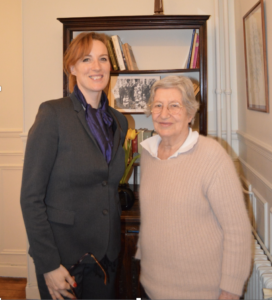
Maryvonne Fournier
Maryvonne Fournier co-authored the book, Re-Education des Fonctions Dans La Therapeutique Orthodontique, which emphasized the neurologic foundations of oral function and long-term stability.
I had the privilege of shadowing Maryvonne in her elegant clinic in Paris. It was there that I deeply understood
the role breathing plays in neurologic learning.
She explained something beautifully simple: when the nervous system is under stress, it cannot learn new patterns.
So if breathing is compromised, teaching functional change becomes nearly impossible.
She also reminded me that relapse is rarely a failure — it simply means the new pattern was never fully integrated neurologically. This concept remains foundational in many therapeutic tools used today.
As Buckminster Fuller wrote:
“To change something, build a new model that makes the existing model obsolete.”
These are some of the principles behind the approach of the Froggymouth.
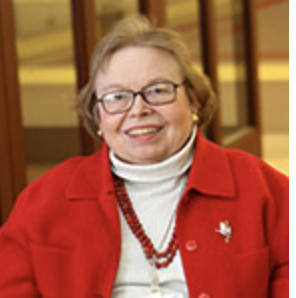
Jerilyn Logemann
As a graduate of Northwestern University, I also want to acknowledge Jerilyn Logemann, whose work revolutionized the field of swallowing disorders (dysphagia).
Logemann developed the modified barium swallow study, now the gold standard diagnostic tool used around the world to assess swallowing physiology.
Her research spanned voice disorders, swallowing in head and neck cancer, and neurologic impairment. She fundamentally bridged the worlds of speech pathology and swallowing science.
Northwestern professor Viorica Marian described her well:
“She was a brilliant scientist, clinician and teacher… who ultimately moved her profession forward.”
Carrying the Work Forward
Today, women continue to make up the majority of clinicians, educators, and students entering the field of myofunctional therapy.
Their work — our work — stands on the shoulders of the women who came before us.
Whether you are just beginning your journey or have practiced for decades, it is impossible to ignore how much we owe to these pioneers who persisted through skepticism, advanced the science, and created a path for the rest of us.
Because of them, we are able to help thousands of patients breathe, sleep, chew, swallow, and live better lives.
And that legacy continues.
Samantha Weaver